Roof Plumber Prices: What Roof and Gutter Plumbing Costs
Why I'm Writing This (And Why Most Roof Plumbing Quotes Confuse People)
I'm Joshua. I've been plumbing around Western Sydney for a long time now, and roof work is one of the jobs I get asked about the most — usually right after a storm, when someone's just found a wet patch on their ceiling and they're googling frantically at 9pm.
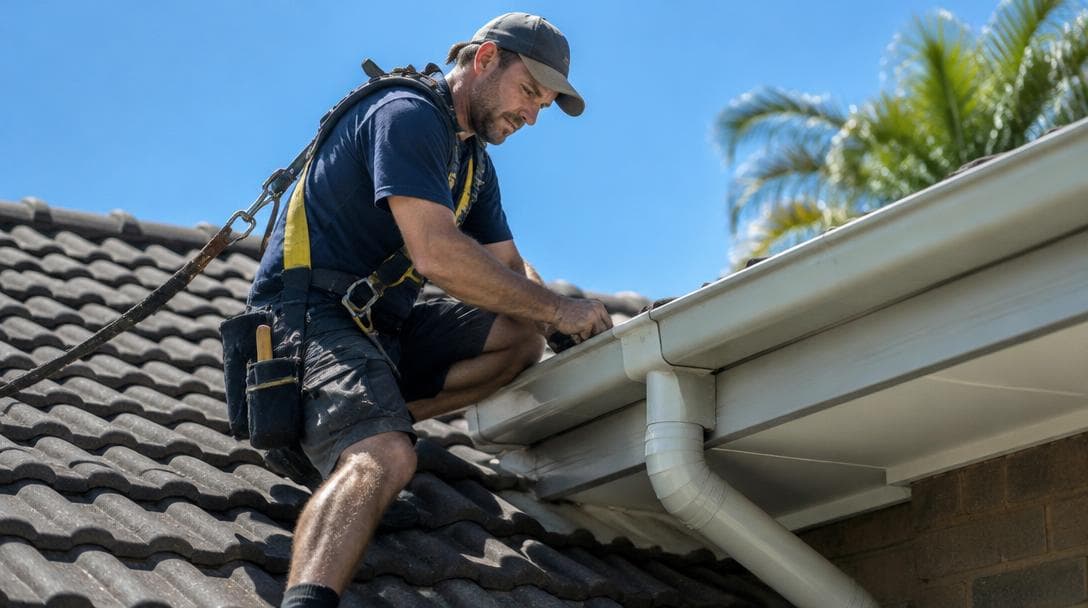
Roof plumbing is a weird corner of the trade. It overlaps with general plumbing, but it's also got its own skills — sheet metal work, flashing, guttering, downpipes, box gutters, the lot. And because most people only deal with it once every few years, they've got no idea what a fair price looks like. So they either panic and pay too much, or they go with the cheapest bloke on a Facebook group and end up calling someone like me six months later to fix it properly.
This isn't a sales pitch. I'm going to walk you through real market price ranges for roof and gutter plumbing across Sydney's west, what actually drives those prices up or down, and when you can get away with a patch job versus when you genuinely need a proper fix. If you've got water coming through right now, this is useful background reading — but if it's actually pouring in, you probably want to jump straight to a burst pipes or emergency plumber call first and read the rest later.
What Does a Roof Plumber Cost Per Hour or Per Call-Out?
Most licensed roof plumbers and general plumbers doing roof work across Western Sydney charge somewhere between $90 and $160 an hour, with a call-out or first-hour fee of roughly $100 to $180 depending on how far they're travelling and what time of day it is. Weekends and after-hours work push that up, sometimes by 50% or more.
A lot of roof jobs aren't quoted hourly though — they're quoted as a fixed price for the job once someone's actually been up on the roof and had a look. That's partly for safety (nobody wants to guess at a price from the ground) and partly because roof conditions vary so much house to house, even on the same street.
If a tradesperson quotes you a roof job sight unseen over the phone, be a bit sceptical. I've been doing this long enough to know that what the homeowner describes and what's actually happening up there are often two different things.
Gutter Repair Costs: What You're Actually Paying For
Gutter repairs are the bread and butter of roof plumbing call-outs, especially after our famous Sydney storms roll through the Blue Mountains and down into the Hawkesbury and Penrith areas. Here's roughly what gutter work costs across the market:
- Minor gutter repair (re-seal a joint, fix a small leak, re-pitch a sagging section): $150–$350
- Gutter re-screwing or bracket replacement (whole run sagging or pulling away from fascia): $300–$800
- Gutter guard installation: $15–$35 per linear metre installed, so $800–$2,500+ for an average home
- Full gutter replacement (one side of a standard house): $1,200–$3,000
- Full gutter replacement (whole house, standard single storey): $2,500–$6,000+
- Box gutter repairs (these are the internal gutters between roof pitches — more complex and higher risk): $400–$1,500 for patch repairs, much more for a full relining
Downpipe Replacement Costs
Downpipes are usually a simpler job than gutters, which is why they're often cheaper, but they're not always straightforward — especially on older homes where the downpipe runs into old stormwater pipe that's half collapsed or full of roots.
A single standard downpipe replacement, like-for-like, typically runs $200–$450 including materials and labour. If you're changing the downpipe material (say, going from old square PVC to modern colorbond) or moving its position, expect $350–$700. If the issue is actually downstream — the downpipe connects into blocked or damaged stormwater drainage underground — that's a different job entirely and crosses over into blocked drains territory, which can add anywhere from $250 to well over $1,000 depending on what's actually broken underground.
One thing I see constantly: people think their gutters are leaking when the real problem is a downpipe that's disconnected underground and just dumping water straight next to the footings. That's a drainage issue wearing a gutter costume. Worth getting someone to actually trace it before you spend money re-sealing gutters that were never the problem.
Roof Leak Repair Costs: The Big One Everyone Searches For
This is probably why you're here. A ceiling stain appears, or water's dripping during a storm, and you want to know what it's going to cost to make it stop. Fair question, and the honest answer is: it depends enormously on the cause.
- Flashing repair or replacement (around chimneys, skylights, vents): $200–$600
- Replacing a handful of cracked or broken roof tiles: $150–$400
- Re-bedding and re-pointing ridge capping (a very common cause of leaks on tiled roofs): $1,000–$3,500 for a full roof, or $300–$800 for a partial section
- Sarking or membrane repair under tiles/sheets: $500–$2,000 depending on access and extent
- Skylight resealing or replacement: $250–$900
- Valley iron replacement (where two roof pitches meet — a classic leak point): $400–$1,200
- Whole roof leak investigation and multi-point repair: $500–$2,500+
Why Roof Leaks Are So Hard to Price Over the Phone
I'll be straight with you — I hate quoting roof leaks without seeing them. Water doesn't travel in straight lines. It can enter the roof at one point, run along a rafter or sarking membrane for two metres, and drip through the ceiling somewhere completely different. I've had jobs where the homeowner was convinced the leak was above their bedroom, and the actual entry point was above the hallway, near a vent flashing that had perished.
This is why a proper roof plumber wants to physically get up there, ideally when it's dry, and trace the path. Anyone who gives you a firm leak repair price without inspecting the roof is either very experienced with that exact house type, or guessing. Sometimes both.
If your leak is only happening in heavy wind-driven rain and not in straight-down rain, that's actually useful diagnostic information — it usually points to flashing or valley issues rather than a cracked tile. Mention that detail when you call someone; it saves time.
Repair or Replace? How I Make the Call
This is the question I get asked constantly, and the honest answer is that it's about the age and condition of the whole system, not just the broken bit.
If your gutters are aluminium or colorbond and less than 15 years old, repairing a section almost always makes sense — patch it, move on with your life. If they're the old style steel gutters that are rusting through in multiple spots, and you've already repaired two sections in the last couple of years, you're usually better off biting the bullet on full replacement. Patching rust is a losing game; it'll just show up somewhere else next season.
For roofs, it comes down to how widespread the problem is. One or two leak points on an otherwise sound roof? Repair it, no question. But if you've got multiple leak points, sagging sections, and the roof is original to a 30+ year old house, sometimes a proper roof plumber will tell you honestly that a full re-roof or re-sheet is the better long-term money decision — even though that's a much bigger spend. I'd rather tell a customer that upfront than keep billing them for patch jobs on a roof that's on its last legs.
A decent tradesperson should be comfortable saying "this can wait" as much as they're comfortable saying "this needs doing now." If every single thing on your roof suddenly needs replacing according to the quote, get a second opinion.
Is Roof Plumbing Something You Can DIY?
Some of it, yes — carefully. Clearing debris out of gutters, for example, is something plenty of homeowners do themselves, provided you've got a stable ladder, someone holding it, and you're not doing it on a steep or wet roof. I'd never discourage basic gutter cleaning as a DIY job if you're comfortable with heights.
Where I'd draw a hard line is anything involving walking on tiles (they crack more easily than people think, and a cracked tile you don't notice becomes next winter's leak), anything on a steep pitch, two-storey work, or anything involving sheet metal cutting and flashing installation. The margin for error is small, the fall risk is real, and a botched flashing job often causes a worse leak than the one you started with.
If you do get up there yourself for a clean-out, at minimum check for: sagging sections holding water, rust spots, loose brackets, and debris build-up around downpipe entries. That's useful information to pass on to whoever you call for the real work.
What Drives Roof Plumbing Prices Up in Western Sydney Specifically
A few local factors genuinely affect pricing out this way, and they're worth knowing before you compare quotes:
- Roof pitch and access — steep roofs in areas like the Blue Mountains often need scaffolding or harness systems, which adds labour cost
- Two-storey homes, common in newer estates around Penrith and the Nepean area, generally cost more for any roof access job
- Older housing stock in suburbs through The Hills District and parts of Blacktown often has original steel gutters nearing end of life, meaning repair costs can escalate into replacement costs fast
- Acreage and rural properties around the Hawkesbury and Riverstone often have larger roof footprints, longer gutter runs, and sometimes tank water systems tied into the guttering, which adds complexity
- Travel time matters — a plumber based centrally will generally charge more to get to Lithgow or the far Mountains than to a job ten minutes from their depot
Insurance and Roof Leaks: What's Actually Covered
This comes up a lot after storms, so worth covering honestly. Home insurance generally covers sudden storm damage — a tree branch through the roof, tiles ripped off in high wind, that sort of thing. What it typically does not cover is gradual deterioration: a roof that's been slowly leaking for two years because the flashing perished and nobody noticed until the ceiling sagged.
Insurers will often send their own assessor, and it's worth getting your own independent roof plumber's report too, especially if there's any dispute about whether the damage was sudden or gradual. I've written plenty of reports over the years for homeowners who needed something in writing beyond the insurance assessor's verbal opinion. It's a reasonable thing to ask for, and a good tradesperson won't hesitate to provide one.
If you're claiming on insurance, get quotes and photos before any repair work starts wherever possible. It makes the whole process smoother and avoids arguments later about what was damaged versus what was already worn.
Seasonal Timing: When to Get Roof Plumbing Done
There's a sensible rhythm to roof maintenance in this part of the world, and it's worth planning around rather than only reacting when something fails.
Late winter into early spring is the ideal window for gutter cleaning and roof inspections, right before our storm season ramps up through summer. Booking then means you're fixing small issues before they become urgent ones, and you're not competing with every other homeowner in Western Sydney trying to book a roof plumber the week after a major storm has rolled through.
After any significant storm — hail, high wind, or heavy rain events — it's worth a quick visual check from the ground with binoculars, or a professional inspection if you've got any reason to suspect damage. Hail in particular can crack tiles in ways that aren't obvious until the next heavy rain finds the gap.
I'll also say this: don't ignore small issues over winter just because it's cold and nobody wants to be on a roof. A small leak in June is still a small leak. Left until spring, it's often a bigger one, because water doesn't take a break just because the tradesperson would rather not climb a ladder in the cold.
Questions to Ask Before You Book a Roof Plumber
A few good questions will tell you a lot about who you're dealing with:
- Are you licensed for roof plumbing specifically, not just general plumbing? (In NSW, roof plumbing work generally requires its own licence class)
- Will you give me a fixed price after inspection, or is this hourly with no cap?
- Do you carry public liability and workers insurance for roof access work? Ask to see proof, it's a fair question
- What's your process if you find something worse once you're up there?
- Is there a warranty on the repair, and for how long?
- Will you give me photos of the problem area? Any decent roof plumber can do this easily now with a phone
Red Flags I'd Walk Away From
A few things that should make you pause. Anyone knocking on your door unsolicited after a storm claiming they "noticed damage on your roof" and offering a cheap fix right now — that's a classic scam pattern, and it happens a lot in storm season across the outer suburbs. Always get a second opinion before paying a stranger who showed up uninvited.
Be cautious of quotes that are dramatically cheaper than everything else you've received, especially for full gutter or roof replacement. Materials and proper flashing techniques cost what they cost; if someone's way under market, they're usually cutting corners on sarking, flashing details, or simply not licensed for the work.
And be wary of anyone pressuring you to sign on the spot for a large job. A reasonable roof plumber will let you sit on a quote for a few days unless there's an active leak needing urgent attention.
Ways to Save Money on Roof and Gutter Plumbing
A few genuinely useful tips from years of doing this work:
- Get gutters cleaned twice a year — once before storm season, once after leaf drop — small cost now versus water damage repair costs later
- Bundle repairs — if you've already got someone on the roof for one job, ask them to check the rest while they're up there; it's often a small add-on cost versus a second call-out
- Don't wait on small leaks — a $200 flashing repair now is cheaper than the $2,000+ ceiling and insulation repair bill after months of slow water damage
- Compare at least two quotes for anything over $1,000, and ask both for the same scope so you're comparing apples with apples
- Keep an eye out seasonally for specials on gutter cleaning or roof inspections — plenty of plumbers run these in the lead-up to storm season
The Bottom Line on Roof Plumbing Costs
Small repairs — a leaking joint, a cracked tile, a loose bracket — generally land in the $150–$500 range. Mid-size jobs like partial gutter replacement, flashing work or ridge capping repair sit more around $500–$2,000. Full gutter or roof system replacement is a bigger investment, usually $2,500 upward, but it's also the job that stops you calling a plumber out every year for the same recurring leak.
If you're not sure which category your problem falls into, that's genuinely fine — it's what an inspection is for. If you're dealing with an active leak right now and need someone out urgently, head to our emergency plumber page. For everything else, it's worth reading up a bit more — our guides on how much does a plumber cost and leak repair costs cover related ground if you're trying to budget for a few jobs at once.
And if in doubt, just ask. Any roof plumber worth hiring would rather answer three extra questions on the phone than turn up to a job that wasn't what either of you expected. Check out our testimonials or read more About how we approach jobs, or just get in touch if you want a straight answer on your specific situation.

Joshua
Joshua is the licensed plumber behind Plumber Western Sydney. He's spent years on the tools across Western Sydney, the Blue Mountains and Lithgow — everything from midnight burst pipes to full bathroom rough-ins. He writes these guides the way he talks on a job: straight answers, honest prices, and no upselling.
Roof leak right now?
A plumber answers 24/7, and you'll know the price before we start.