How Much Does a 24 Hour Emergency Plumber Cost?
The 2am Phone Call Nobody Wants to Make
There's a particular tone of voice people use when they call me at 2am. It's half panic, half embarrassment, like they're worried I'll be annoyed at being woken up. I'm not — it's the job. But I always ask the same first question before we talk price: what's actually happening right now?
That question matters because "emergency plumber" covers everything from a genuinely flooding house to a dripping tap that's been dripping for three weeks and suddenly felt urgent at midnight. The price you pay, and honestly whether you should even call at 2am versus 7am, depends entirely on which one you've actually got.
This guide is my honest rundown of what 24 hour emergency plumbing actually costs across Western Sydney, what's worth the after-hours rate, and what can wait until the sun's up and save you a chunk of money. If water's actively pouring through your ceiling right now, stop reading and get onto our emergency plumber line — otherwise, let's get into it properly.
I say this to every customer who apologises for calling late: don't. A burst pipe doesn't check the clock before it lets go, and a plumber who makes you feel bad for calling at an awkward hour isn't someone you want on the tools at your place anyway. What matters is making a sensible call about whether it's truly urgent, which is exactly what the rest of this guide is here to help with.
What 24 Hour Emergency Plumbers Typically Charge
These are general market ranges I see quoted across Sydney, not a fixed price list from any one business — every job and every plumber is different, and the final number always depends on what's actually wrong.
Most emergency plumbers charge a callout fee on top of the hourly or job rate, and that callout fee is where after-hours pricing really bites. A standard daytime callout might be $80 to $150. After hours — nights, weekends, public holidays — that same callout fee often jumps to $150 to $350 just to get someone in the door, before any actual work starts.
On top of that, labour rates after hours typically run $150 to $250 an hour compared to $90 to $180 during standard business hours, roughly a 50-100% premium depending on the time and the plumber.
For specific common emergencies, here's what people usually end up paying all up, callout plus labour plus parts: a burst pipe repair at 3am might run $350 to $900 depending on access and pipe type. A blocked toilet overflowing as the only toilet in the house, done urgently at night, often sits around $250 to $500. A hot water system that's died and is actively leaking, needing an emergency same-day replacement, can run anywhere from $1,200 to $3,000+ depending on the unit. Gas leaks requiring an urgent after-hours response usually run $200 to $500 for the initial callout and isolation, with repair costs on top.
Those numbers move a lot based on your suburb, how far the plumber has to travel, what time it actually is, and how complicated the fix turns out to be once they're looking at it.
Time of night matters more than people expect too. A callout at 10pm is often priced differently to one at 3am, simply because fewer plumbers are willing to take 3am jobs and the ones who do tend to charge accordingly. Public holidays, especially ones like Christmas Day or Easter Sunday, usually sit at the very top of the pricing scale across the whole industry, not just with us.
What Genuinely Counts as a Plumbing Emergency
I've been called out plenty of times for things that, looking back, probably could've waited. I never make anyone feel bad about it — better to call and be told it can wait than to let something genuinely serious sit overnight. But to help you make that call yourself, here's my honest list.
- Burst pipe actively flooding a wall, ceiling or floor — turn off the water at the mains and call immediately
- No hot water at all when there are babies, elderly residents or medical needs in the house
- Gas smell anywhere in or around the property — leave the house, don't flick switches, call us and the gas emergency line
- Sewage backing up into the house through a toilet, shower or floor drain
- Only toilet in the house blocked and unusable, especially overnight with a family
- Hot water system leaking badly onto flooring or near electrics
- A burst or leaking pipe near the electrical meter box or switchboard
- Overflowing stormwater during heavy rain that's tracking towards the house
A Real Call-Out Story: When It Was Worth It
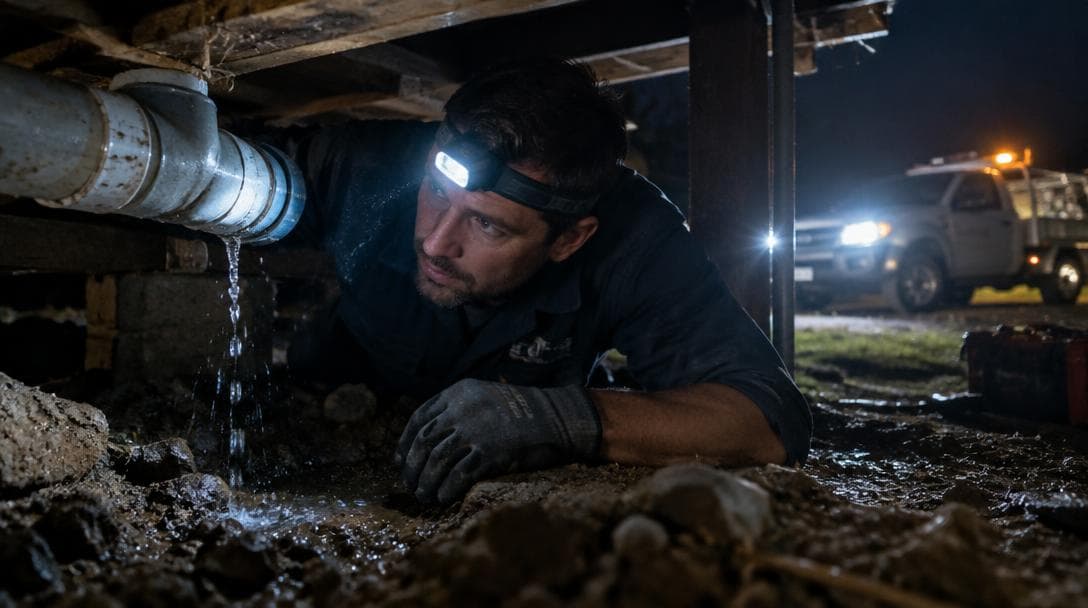
A few years back I got a call at about 1am from a young family in Blacktown. Water was coming through a light fitting in the hallway ceiling, which is about as unnerving as it gets when you've got live electrics involved. Turned out a pipe fitting in the bathroom above had let go completely. Mains were off within minutes of my advice over the phone, which limited the damage to one section of ceiling rather than half the house.
That one was worth every cent of the after-hours rate. Left until morning, that ceiling cavity fills with water, the electrics get properly wet, and you're looking at an electrician, a ceiling repair and a much bigger mess on top of the plumbing fix. Compare that to a call I got the same month from someone with a slow bathroom tap drip wanting it fixed "before I go to bed" — that one genuinely could have waited, and I said so honestly rather than take the job.
What Can Honestly Wait Until Morning
On the flip side, here's what I'd tell a mate to sit on overnight and call during business hours instead, saving the after-hours premium.
- A slow dripping tap — annoying, not dangerous, can wait
- A toilet that's running or not flushing properly if you have a second toilet
- Low water pressure in one fixture only
- A slow-draining sink or shower that's still draining, just slowly
- Minor hot water temperature fluctuation, as long as you still have some hot water
- A small, stable leak under a sink that's been bucketed or towelled and isn't spreading
- Dripping or whistling noises in pipes without any visible leak
What to Do in the First Five Minutes of a Real Emergency
Before the plumber even arrives, there's a handful of things that genuinely limit damage and sometimes save you real money by reducing the clean-up and repair scope.
Know where your water mains shut-off valve is before you ever need it — usually near the front boundary or at the water meter. Turning this off stops a burst pipe from continuing to flood the house while you wait.
If it's a gas smell, don't touch light switches, don't light anything, get everyone outside, and call both your gas provider's emergency line and a licensed plumber or gas fitter. Our gas fitting page has more on what's safe to do versus what to leave strictly to a licensed professional.
If a hot water system is visibly leaking, switch it off at the isolation switch or breaker if it's electric, and shut the cold water inlet valve on top of the unit if you can safely reach it.
For a burst pipe, mains off first, then move anything valuable away from the water, and towel or bucket what you can while you wait. Photos of the damage for insurance purposes are worth taking once everyone and everything is safe.
Why After-Hours Pricing Exists (and Why It's Not a Rip-Off)
I get asked this a lot, usually by someone mid-panic who's just been quoted a Saturday midnight rate. It's a fair question. The honest answer: a plumber working a genuine emergency at 1am is giving up sleep, pulling away from family, and often driving across Western Sydney suburbs in the dark to get to you fast. That time has a real cost, and the premium reflects that, not greed.
A legitimate emergency plumber isn't charging after-hours rates because they can — they're charging it because responding at 1am costs them more to deliver than a 10am booking slot that fits neatly into a normal day. The plumbers who gouge are usually the ones adding vague "emergency surcharges" on top of an already-inflated hourly rate with no transparency about what it actually covers.
What you should expect from a fair operator: a clear callout fee quoted upfront, an hourly or fixed job rate explained before work starts, and no surprise multipliers added after the fact.
Questions to Ask Before You Agree to an After-Hours Callout
When you're stressed and it's the middle of the night, it's easy to just say yes to whoever picks up the phone. A minute of questions upfront can save you a nasty invoice shock.
- What's the callout fee, and does it include the first X minutes of labour?
- What's the hourly rate after that, and is it charged in full-hour or part-hour increments?
- Is GST included in the number you're quoting me?
- Will I get a price before you start, or only an estimate?
- Are you licensed and insured? Ask for the licence number
- Do you carry common parts on the truck, or will there be a second trip (and second callout fee)?
- Is there a warranty on emergency repairs the same as standard work?
Emergency Plumber vs Regular Plumber: When to Just Wait for Monday
A good chunk of my after-hours calls, if I'm honest, are things that would've cost half as much if the person had waited twelve hours. There's no shame in it — it's hard to judge severity when you're stressed and it's dark outside. But knowing the difference genuinely saves you money.
If you've got a problem that isn't actively getting worse — a slow leak, a blocked drain you can work around, a toilet that's not your only one — book a standard appointment. You'll pay standard rates, which, as I cover in our general plumber cost guide, are considerably lower than emergency rates across the board.
If it's a recurring blocked drain rather than a one-off emergency, it's worth reading up on blocked drain costs separately, since tree roots and old pipes are common culprits in older Western Sydney homes and the fix is often different to a one-off emergency clear.
And if the "emergency" turns out to be a leak that's been quietly running for a while, our leak repair cost guide breaks down what that kind of job usually costs once it's not an emergency anymore.
Older Western Sydney Homes: Why Emergencies Happen More Often Out Here
A lot of my emergency callouts come from older housing stock across Penrith, Blacktown, and pockets of the Hills District where original plumbing from the 60s, 70s and 80s is still doing the job it was never designed to do for this long. Galvanised steel pipes corrode from the inside and eventually split without warning. Old clay drain pipes crack from tree roots and ground movement, and the first sign is sometimes a sudden backup rather than a slow warning.
Out in the Hawkesbury and Blue Mountains, older acreage properties often have longer pipe runs, septic systems, and tank-fed hot water setups, all of which fail in slightly different ways to a standard suburban block, and sometimes in more remote spots where getting a plumber out fast matters even more.
If your home was built before the mid-1980s and you've never had the plumbing assessed, a proactive inspection genuinely reduces your odds of a 2am callout. It's a lot cheaper to replace an ageing pipe on a Tuesday afternoon than to deal with it bursting through a ceiling on a Friday night.
Insurance and Emergency Plumbing: What's Usually Covered
Home insurance policies vary a lot, but generally sudden and accidental damage — like a burst pipe flooding a room — is covered, while gradual wear and tear, like a slow leak that's been dripping for months, often isn't. This is another reason the "can it wait" question matters: if something's been slowly getting worse for weeks and you've ignored it, insurers can push back on a claim.
Always photograph the damage before clean-up starts, keep the invoice from your emergency plumber with a clear description of the cause (not just "fixed leak"), and call your insurer early rather than after everything's already repaired. A good emergency plumber will give you a written report if you ask, which makes claims much smoother.
If you're in a strata property, check with your strata or commercial plumber contact and body corporate about which emergency repairs are the owners corporation's responsibility versus your own — this gets confusing fast with shared pipes and ceiling leaks between units.
How to Actually Find a Reliable Emergency Plumber Near You
Searching "emergency plumber near me" at 1am throws up a dozen ads, and it's genuinely hard to tell who's reliable versus who's just bought the top ad spot. A few practical tips.
Save a number before you need it. Don't wait until there's water on the ceiling to start googling — have a trusted local plumber's number in your phone, the same way you'd have an electrician's.
Check they actually service your specific area. A plumber based two suburbs over might quote a lower rate but add a big travel surcharge for reaching you out near Riverstone or further out toward Lithgow — always ask about travel costs upfront for more remote addresses.
Look for real reviews mentioning emergency response specifically, not just general plumbing reviews, since response time and after-hours professionalism are a different skill to a scheduled job well done. Our testimonials page has a few from customers who called us in genuine middle-of-the-night situations if you want a sense of what to expect.
And if you're not in crisis mode right now, it's worth bookmarking a plumber you trust and even checking their specials page occasionally, since some emergency callout fees get waived or discounted for existing customers or during certain periods.
What to Expect When the Plumber Arrives
A good emergency plumber turns up with a fully stocked van because they know night calls don't allow for a trip to the hardware store. They should quickly assess the situation, confirm the price with you before starting any repair (beyond the immediate step of stopping active damage, like isolating water or gas), and explain what they're doing as they go.
If the fix is temporary — say, a pipe clamp to stop a burst overnight with a proper repair booked for the next business day — that should be explained clearly, including the cost difference between the temporary stabilisation and the permanent fix. There's nothing wrong with a temporary fix at 2am, as long as you know that's what it is and you've got a follow-up booked.
Get a proper invoice, not just a card payment with no breakdown. You want it for warranty purposes and for insurance if you end up claiming.
The Bottom Line on Emergency Plumber Costs
Expect to pay a callout fee of roughly $150-$350 after hours, with labour rates typically 50-100% above standard daytime pricing, and total job costs ranging from a few hundred dollars for a straightforward urgent fix up to several thousand for a major hot water or burst pipe emergency. It's not cheap, and it's not meant to be — but a genuine emergency, left untreated overnight, almost always costs more in water damage, stress and follow-up repairs than the after-hours premium does.
If something's happening right now anywhere across Western Sydney, from Penrith to the Hills District, don't sit on it wondering if it's "bad enough" to call — reach out via our emergency plumber service or contact page and we'll help you figure out what's urgent and what can wait, honestly, before anyone commits to a callout.
And if you want to understand plumbing costs more broadly before your next job, whether it's an emergency or not, have a look through the rest of our blog or about page to see how we work and what locals have said about us.
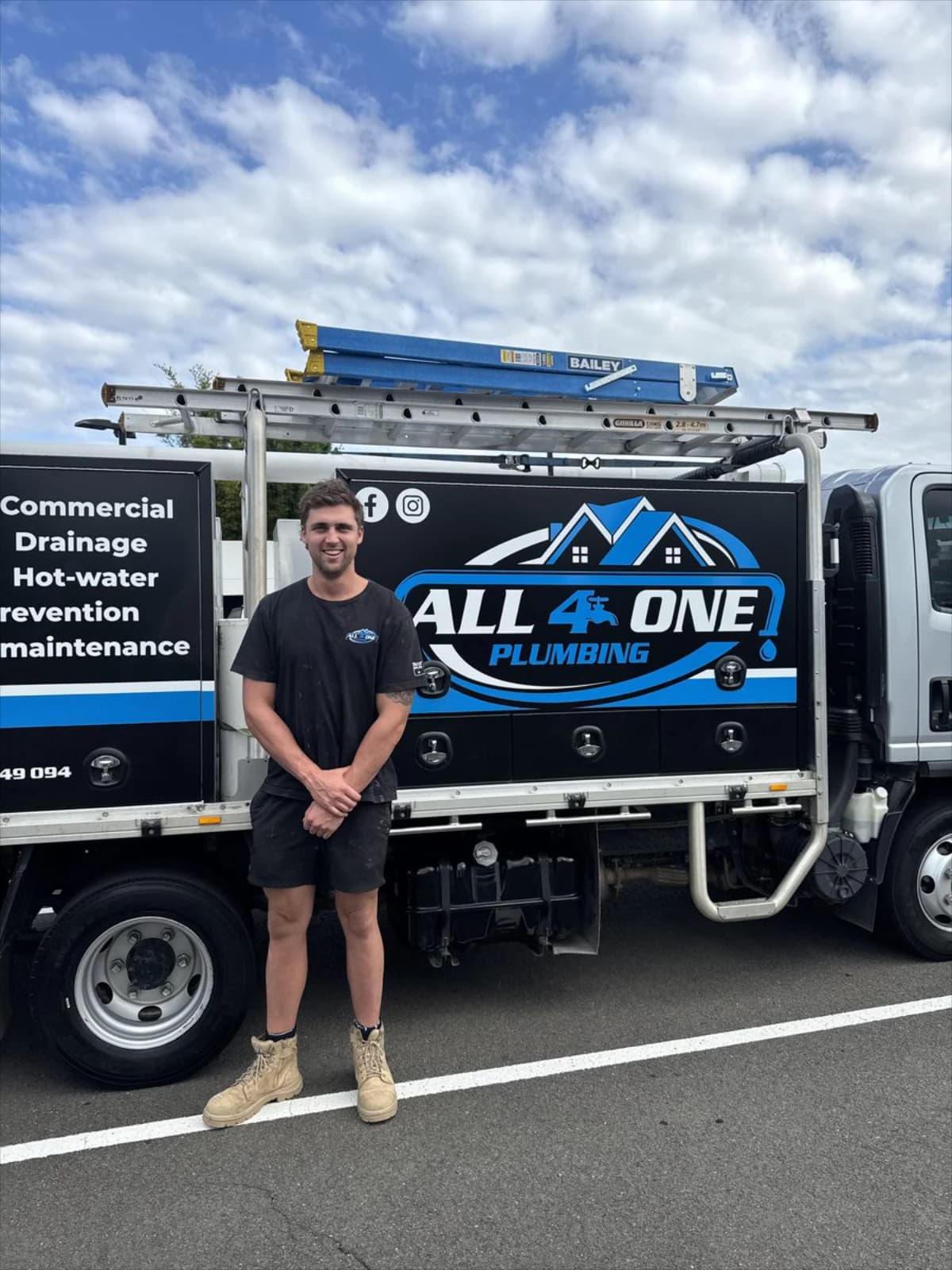
Joshua
Joshua is the licensed plumber behind Plumber Western Sydney. He's spent years on the tools across Western Sydney, the Blue Mountains and Lithgow — everything from midnight burst pipes to full bathroom rough-ins. He writes these guides the way he talks on a job: straight answers, honest prices, and no upselling.
Emergency right now?
A plumber answers 24/7, and you'll know the price before we start.